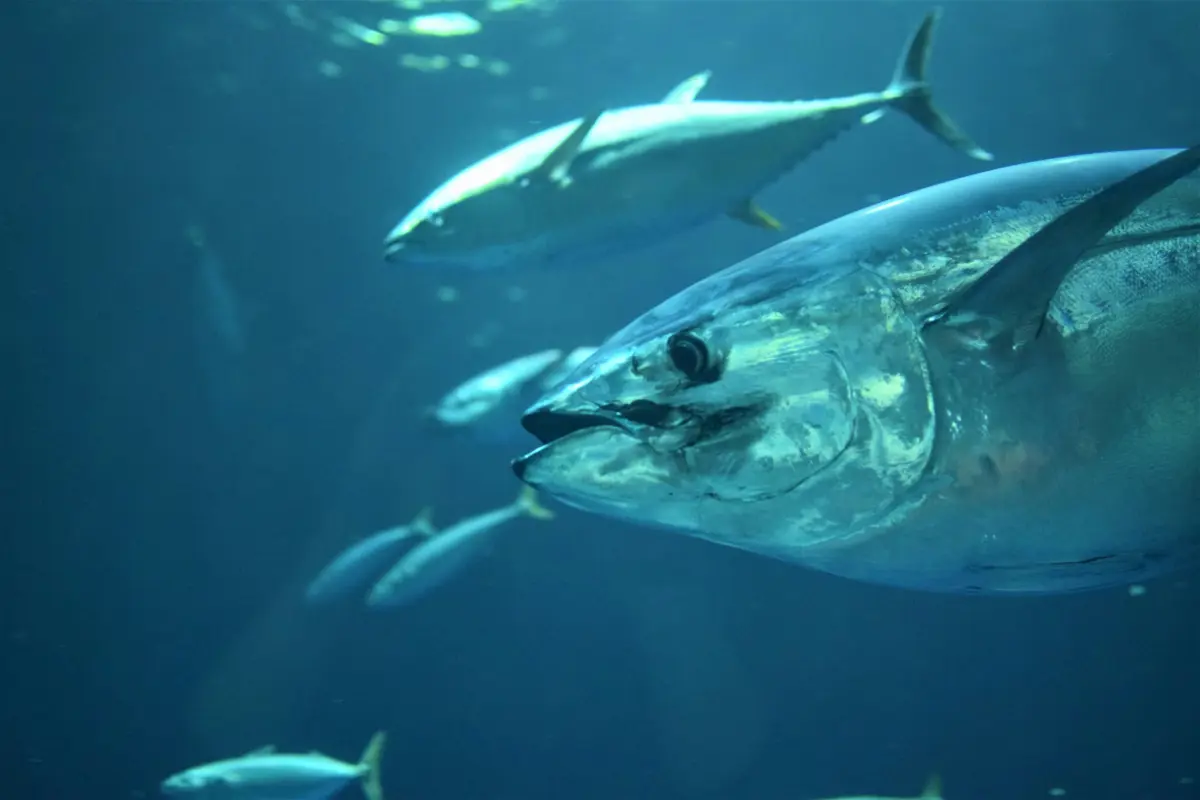
A lot of attention has landed on southern bluefin tuna (SBT) since the recreational fishery exploded off Waihau Bay in 2017. Here's what's actually going on with the fish behind that fishery.
One Population, One Spawning Ground
There's only one population of SBT in the world, and it breeds in a single place — between Java and northwest Australia, in tropical water, between September and April. If you take the Indian Ocean as the centre of its range, New Zealand sits right at the far eastern edge.
The Migration
SBT hatch in the tropics, drift southwards past the west coast of Australia, and reach about 50 cm in their first year. Until about age 5 they spend their summers in the Great Australian Bight, then in winter push either east towards New Zealand or west towards South Africa, returning to Australia the following summer.
A study of large SBT in the Tasman Sea found them holding in water between 19°C and 21°C, moving up and down the water column to maintain a constant light level over 24 hours. That's very likely why night jigging for these fish has become so effective.
A Fish That Takes Its Time
Unlike yellowfin, SBT can live for over 30 years and don't reach sexual maturity until 155 cm. That means a 70 kg or even 80 kg SBT is very likely an animal that has never spawned. They may not even spawn every year — satellite tagging has shown some individuals skip a year, likely because the journey to the spawning grounds is so long and physically demanding that a fish won't make the trip unless it's in good enough condition.
A Species Under Pressure — and Recovering
SBT have been fished hard since the 1960s, and were listed as critically endangered in the 1990s. That's had a knock-on effect on growth rates: fewer fish generally means less competition for food, so each individual has access to more of it. A 1960s model put a 10-year-old SBT at 150 cm; a 1980s model put the same fish at 160 cm. That's a meaningful difference for a single decade of growth-rate change.
Management has improved since, and in 2021 the species' status moved from critically endangered to endangered.
Next: Pacific bluefin, the SBT's larger, faster-growing cousin — and how to tell the two apart when it matters.
← Previous: Yellowfin | Series hub | Next: Pacific Bluefin →
Words by Lonny, marine biologist.