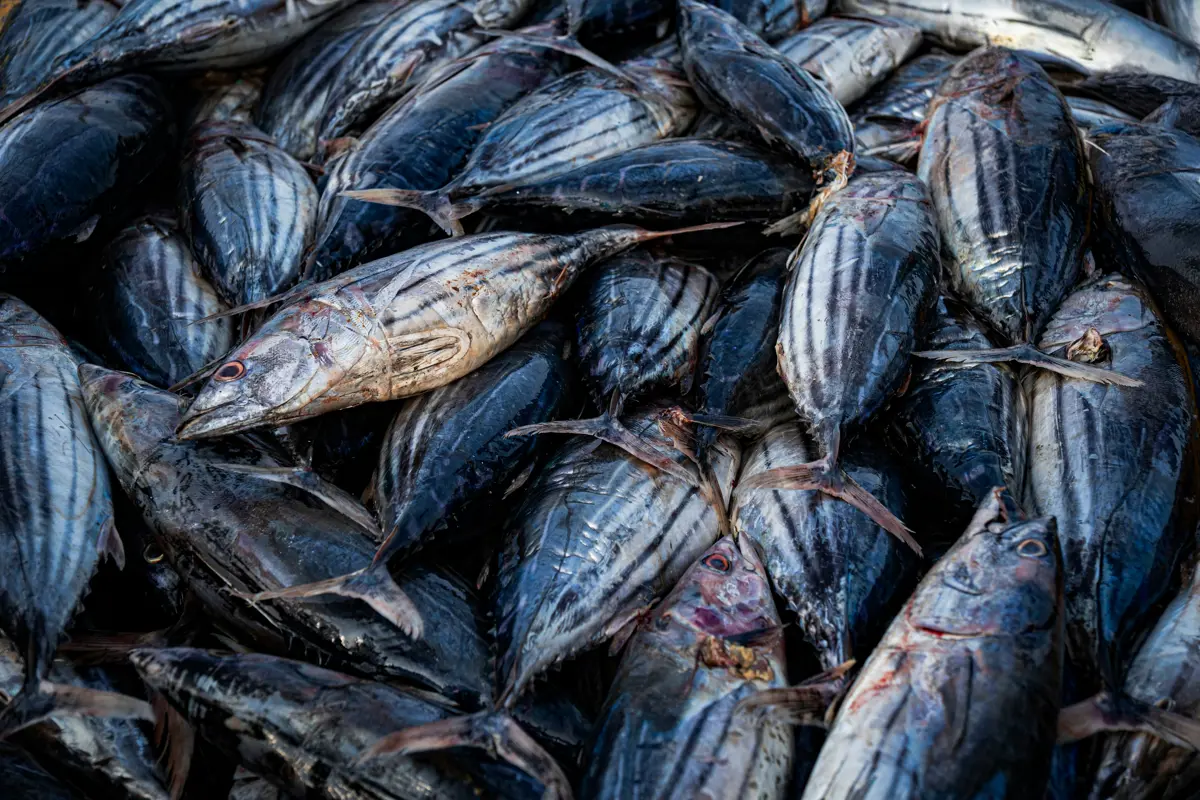
If you want to know what makes skipjack different from every other tuna species, look at the plumbing.
Skipjack (Katsuwonus pelamis) sits outside the “true tuna” group. Two things rule it out: the way it deals with the excess heat its swimming muscles generate, and the fact it has no scales behind the head and pectoral fins — something every true tuna has.
One Heat Exchanger, Not Several
Skipjack recycle their heated blood through a single central heat exchanger, sitting underneath the vertebral column, and they're incredibly efficient at it. The other tuna species covered in this series run their heat exchangers down the lateral line instead.
The Most-Fished Tuna on Earth
By weight, skipjack is the most heavily fished tuna species in the world. It's a tropical and subtropical fish, generally found in the top 200 m of the water column, and prefers water temperatures of roughly 20–30°C.
That preference is exactly why New Zealand sits at the global southern limit for the species — we're about as far from the tropics as skipjack are prepared to go.
Next in the series: albacore, the tuna with the highest fat content of the lot — and the one you'll find sold as “white meat tuna” in the US.
← Back to the tuna series hub | Next: Albacore →
Words by Lonny, marine biologist.