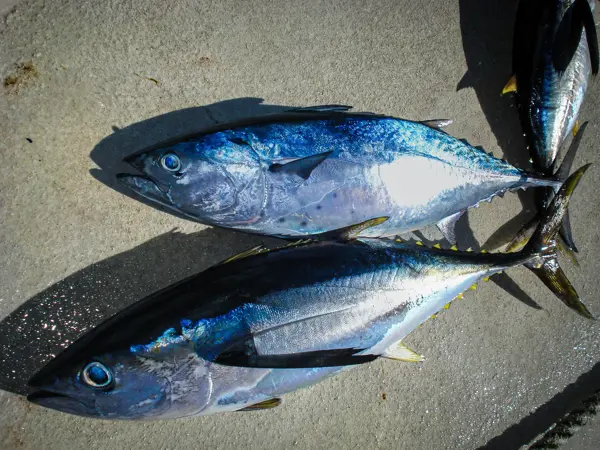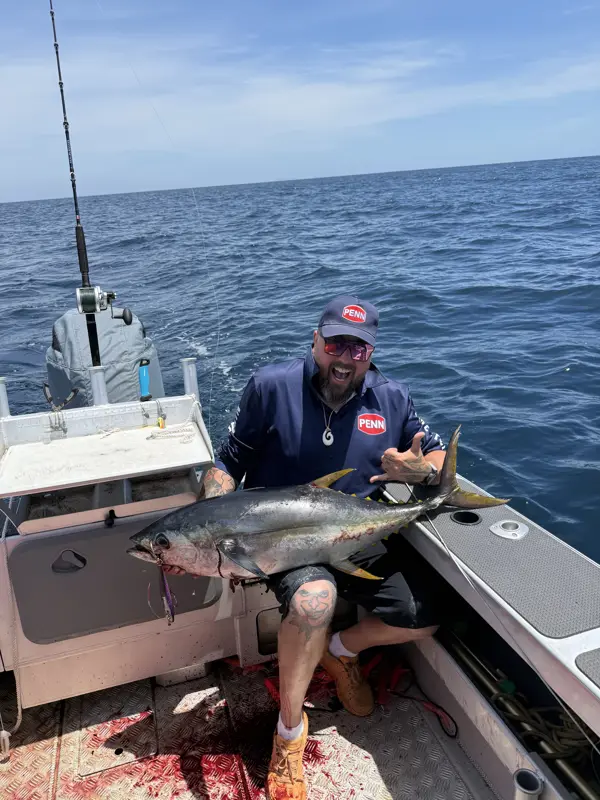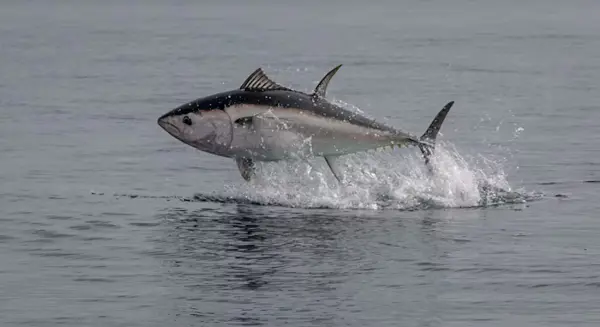
The tunas are an incredible group of fish, and we're lucky to be able to encounter them in New Zealand waters. As with all fish, but especially tuna, what you do in the first few minutes after landing one matters more than most anglers realise.
Why Tuna Are Different
Tuna are unlike most other fish you'll bring aboard. Their thermoregulation — the same heat-exchanger system that lets them swim faster and colder than almost anything else in the ocean — works against them once they're out of the water. A tuna's body generates and holds heat efficiently by design. After capture, that heat has nowhere to go, and it builds quickly. Flesh quality drops fast once that happens.
The Three Steps That Matter
Bleed it fast. Cut the gills or the base of the tail as soon as the fish is secured. Getting the blood out early is the single biggest factor in flesh quality — wait too long and the meat carries heat and blood that degrades texture and colour.
Gut it promptly. Removing the gut stops digestive enzymes and bacteria from breaking down flesh from the inside, and it's another route for heat to escape the body cavity.
Cool it immediately. Straight into an ice slurry if you can manage it, or a well-iced bin at minimum. A tuna that's bled and gutted but left to sit in a warm kill tank or open cockpit will still spoil fast.
Rapid Bleeding, Gutting and Cooling — In That Order
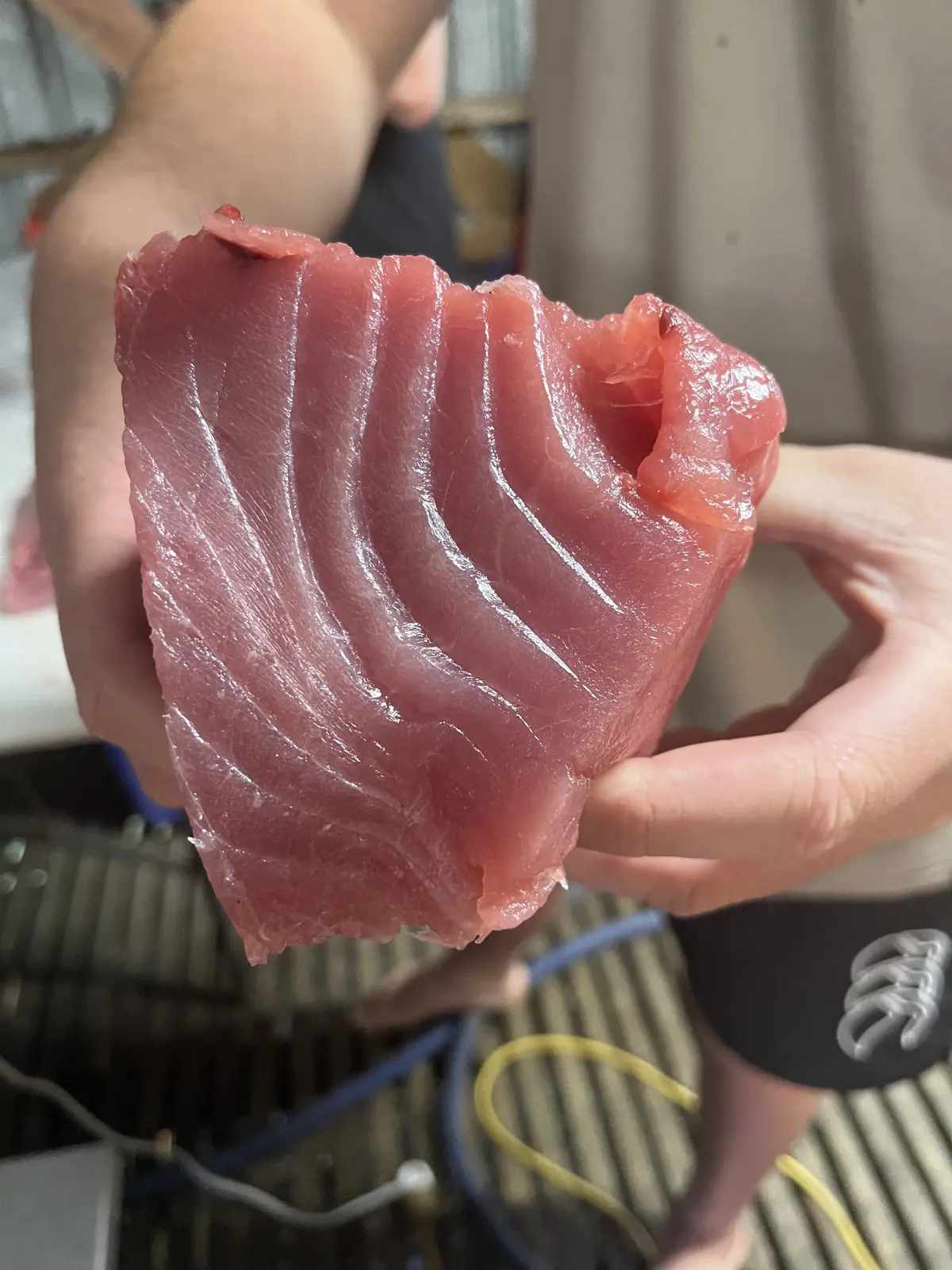
Do all three, and do them fast. It's the difference between bringing home tuna that eats like sashimi-grade fish and tuna that ends up as cat food. Given how hard some of these species work to keep themselves warm, giving them a fast, cold exit is the least we can do.
← Previous: Pacific Bluefin & Telling Them Apart | Back to series hub
Words by Lonny, marine biologist.